
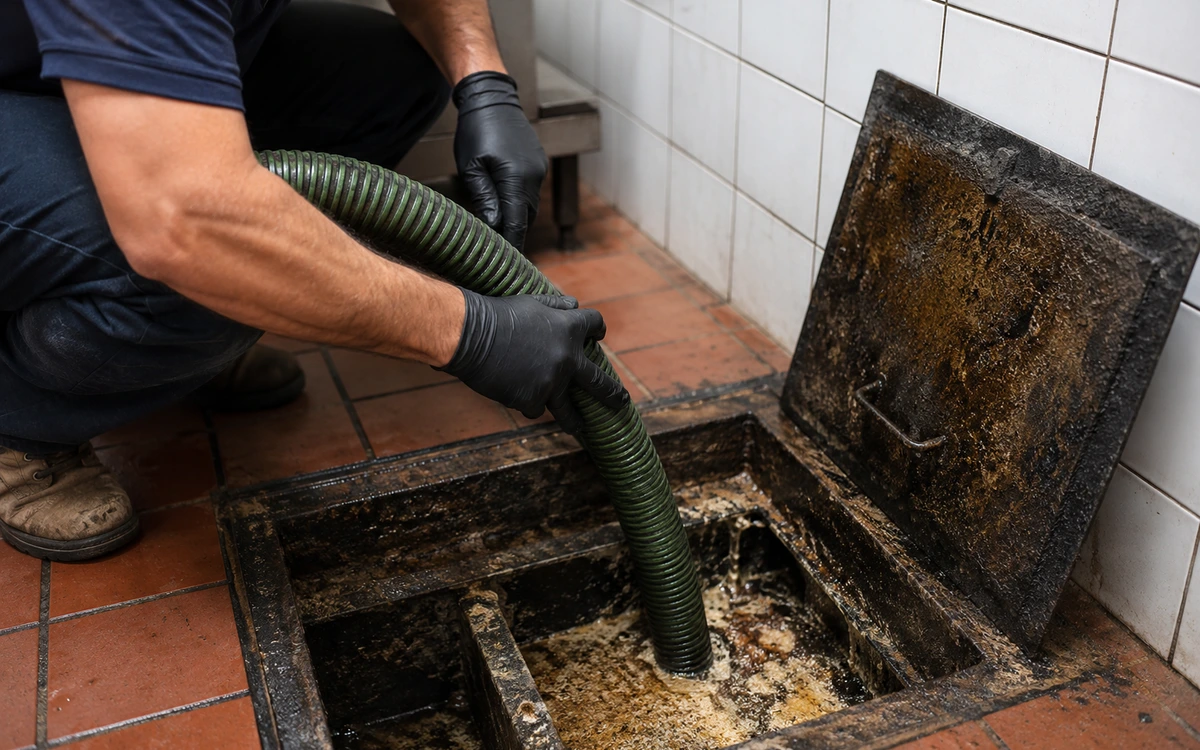
We provide professional restaurant grease trap cleaning services in Marquette, MI for grease buildup, foul odors, clogged drains, and overflow issues that disrupt kitchen operations and create unsanitary conditions. Pump and clean removes trapped fats, oils, and solids from interceptor systems, clears blockages in drain lines, and restores proper flow to prevent backups and maintain safe kitchen drainage. Request a quote today.
Why Do Restaurant Grease Traps Clog so Quickly?
Grease traps clog quickly because fats, oils, and grease cool and solidify inside the chamber, forming thick layers that restrict flow. Food particles and soap residue also mix in, accelerating buildup along the walls and baffles. Over time this reduces separation efficiency and slows drainage.
How Do Lake Superior Weather Conditions and Tourism Cycles Affect Restaurant Grease Trap Cleaning in Marquette?
In Marquette, Lake Superior cold and seasonal tourism can cause grease to thicken and accumulate more quickly in kitchen systems. Areas near Downtown and the waterfront often see grease traps filling quickly during summer and winter visitor peaks. Regular cleaning helps maintain drainage in harsh, lake-influenced restaurant environments.
What Are the Most Common Signs a Grease Trap Needs Cleaning?
The most common signs are slow-draining sinks, foul odors coming from floor drains, and visible grease floating in wastewater. You may also notice gurgling pipes or backups during peak kitchen hours. These symptoms indicate the trap is reaching capacity and can no longer separate grease effectively.
What Happens If a Restaurant Grease Trap Is Not Cleaned Regularly?
A neglected grease trap will eventually overflow grease into sewer lines, causing blockages and backups in the kitchen. This can trigger health code violations and forced shutdowns during inspections. Continued buildup also increases the risk of expensive plumbing damage downstream.
How Is Grease Trap Pumping Different From Routine Cleaning?
Grease trap pumping removes the entire accumulated contents, including sludge, grease, and wastewater from the tank. Routine cleaning focuses on scraping buildup, clearing baffles, and restoring separation efficiency between pump-outs. Both are necessary, but pumping handles full-capacity removal.
Can a Full Grease Trap Cause Kitchen Sink Backups?
Yes, a full or clogged grease trap can directly cause wastewater to back up into sinks and floor drains. When the outlet is blocked by grease, water has nowhere to go and reverses flow into the kitchen. This usually happens during high-volume cooking periods.
Do Enzyme Treatments or Chemicals Replace Professional Grease Trap Cleaning?
No, enzyme treatments and chemicals only break down small amounts of grease and help slow buildup. They cannot remove solidified fats or heavy sludge that accumulates in commercial kitchens. Physical pumping and cleaning are still required to fully restore proper function.
How Much Does Restaurant Grease Trap Cleaning Cost in Marquette, MI?
Restaurant grease trap cleaning costs in Marquette, MI typically range between $194 and $774, with estimated pricing depending on trap size, grease accumulation level, access to the interceptor, and required pumping frequency compliance. Pricing can also vary based on disposal fees, line flushing requirements, emergency service calls, and whether additional hydro jetting or enzymatic treatment is needed.